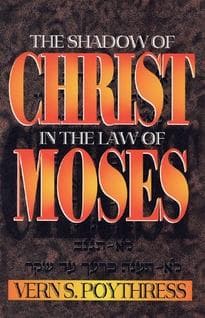
Shadow of Christ in the Law of Moses, The
Poythress demonstrates how the sacrifices, traditions, and penalties of the Law of Moses graphically foreshadow the work of Christ and his relationship with his people.
Table of Contents
Part I: UNDERSTANDING THE DIFFERENT ASPECTS OF THE LAW
The Challenge of the Law of Moses
- Basic principles for interpreting the Old Testament
The Tabernacle of Moses,
- Prefiguring God’s Presence through Christ
- The tabernacle as a symbol of the Messiah
- The tabernacle as a symbol of God’s dwelling with Israel
- The tabernacle as a symbol of heaven
- The furniture of the tabernacle
- The multifaceted character of tabernacle symbolism
- Practical lessons from the tabernacle
- Guidelines for interpreting the revelation of the tabernacle
The Sacrifices, Prefiguring the Final Sacrifice of Christ
- The necessity of holiness
- Redemption from sin
- The sequence of events in sacrifice
- The types of sacrifices
The Priests and the People,
- Prefiguring Christ’s Relation to His People
- The mediatorial role of priests
- Similarities of priests to the tabernacle
- Later replications of the tabernacle
- Pagan counterfeit worship
- The people of Israel
General Principles for God’s Dwelling with Human Beings Prefiguring Union with Christ
- The interaction of tabernacle, sacrifices and priests
- Covenant
The Land of Palestine, the Promised Land
- God’s promise of the land
- The holiness of the land and its symbolic associations
The Law and Its Order
- Prefiguring the Righteousness of Christ
- The law as the sovereign treaty of the great King
- The law articulating God’s order
- The law expressing the way of life
- New Testament application of laws of cleanliness
- Order in personal relationships: the ten commandments
The Purposes of the Tabernacle the Law, and the Promised Land:Pointing Forward to Christ
- The connections of tabernacle symbolism
- The connections of the law
- Moral and ceremonial aspects of the law
- The tabernacle, the law, and the land as elementary and deep
- The righteousness set forth in the law
- Blessing and curse from the law
- The interpretation of Mosaic law in Hebrews
The Punishments and Penalties of the Law Prefiguring the Destruction of Sin and Guilt through Christ
- The righteousness of God’s punishments
- Penal authority given to human beings
- Simple examples of just recompense on earth: murder and theft
- The significance of the injured party: God and human beings
Part II: UNDERSTANDING SPECIFIC PENALTIES OF THE LAW
The Principle of Penal Substitution
- The operation of recompense in Deuteronomy 13
- The significance of holy war: justice and purity
- New Testament Applications
- Applying Deut. 13:1-18 today
- Punishment
- Restoration
Principles of Justice for the Modern State
- The nature of responsibilities of the state
- Principles for just state punishments
Just Penalties for Many Crimes
- Penalties for theft and accident
- Repentant offenders
- Penalties for murder, attempted murder, and manslaughter
- Penalties for bodily injury
- Penalties for verbal crimes
- Penalties for profanation of the holy community
- Penalties for violent usurpation of authority
- Penalties for crimes against servants
Penalties for Sexual Crimes
- Principles involved in understanding Mosaic sexual law
- Penalties for fornication
- Penalties for adultery
- Penalties for sexual perversion
- Alternatives to my position on sexual crimes
Deterrence and Rehabilitation
- The use of the general principle of equivalence
- The role of deterrence and rehabilitation
- The deterrent value of my proposed punishments
- The rehabilitative value of my proposed punishments
A Critique of Prisons
- Does prison justly restore and punish?
- Does prison effectively deter and rehabilitate?
Our Responsibilities Toward Imperfect States
- Primary responsibilities
- Earthly political responsibilities
Fulfillment of the Law in the Gospel According to Matthew
- Matthew 1-4
- Matthew 5-7
- Matthew 5:17-20
- Pentecost in Matthew
- Obedience to the law in the Great Commission
- The broader role of the Old Testament in the Great Commission
- Christocentric interpretation
Appendix A: FALSE WORSHIP IN THE MODERN STATE
- The point at issue: the God-given authority of civil government
- State responsibilities concern offenses against human beings, not offenses against God
- Is false worship an attack against other human beings?
- Is false worship an attack against the state?
- Practical reasoning
- Objection 1: the possibility of renewal of holy war
- Objection 2: false worship incites God’s anger against the whole society
Appendix B: Evaluating Theonomy
- Major Concerns of Theonomists
- Interpreting Old Testament Law
- Old Testament penalties
- The relation of this book to theonomy
- Modifying the theses of theonomy
- Possible objections
- Some possible one-sidedness in theonomy
- Theonomic stridency
Appendix C: Does the Greek Word Πληρόω Sometimes Mean “Confirm”?
- The nature of the dispute
- Analysis of possible examples of the sense “confirm”
- Conclusion
BIBLIOGRAPHY
Product Information
Product Information
Shipping & Returns
Shipping & Returns
Description
Poythress demonstrates how the sacrifices, traditions, and penalties of the Law of Moses graphically foreshadow the work of Christ and his relationship with his people.
Table of Contents
Part I: UNDERSTANDING THE DIFFERENT ASPECTS OF THE LAW
The Challenge of the Law of Moses
- Basic principles for interpreting the Old Testament
The Tabernacle of Moses,
- Prefiguring God’s Presence through Christ
- The tabernacle as a symbol of the Messiah
- The tabernacle as a symbol of God’s dwelling with Israel
- The tabernacle as a symbol of heaven
- The furniture of the tabernacle
- The multifaceted character of tabernacle symbolism
- Practical lessons from the tabernacle
- Guidelines for interpreting the revelation of the tabernacle
The Sacrifices, Prefiguring the Final Sacrifice of Christ
- The necessity of holiness
- Redemption from sin
- The sequence of events in sacrifice
- The types of sacrifices
The Priests and the People,
- Prefiguring Christ’s Relation to His People
- The mediatorial role of priests
- Similarities of priests to the tabernacle
- Later replications of the tabernacle
- Pagan counterfeit worship
- The people of Israel
General Principles for God’s Dwelling with Human Beings Prefiguring Union with Christ
- The interaction of tabernacle, sacrifices and priests
- Covenant
The Land of Palestine, the Promised Land
- God’s promise of the land
- The holiness of the land and its symbolic associations
The Law and Its Order
- Prefiguring the Righteousness of Christ
- The law as the sovereign treaty of the great King
- The law articulating God’s order
- The law expressing the way of life
- New Testament application of laws of cleanliness
- Order in personal relationships: the ten commandments
The Purposes of the Tabernacle the Law, and the Promised Land:Pointing Forward to Christ
- The connections of tabernacle symbolism
- The connections of the law
- Moral and ceremonial aspects of the law
- The tabernacle, the law, and the land as elementary and deep
- The righteousness set forth in the law
- Blessing and curse from the law
- The interpretation of Mosaic law in Hebrews
The Punishments and Penalties of the Law Prefiguring the Destruction of Sin and Guilt through Christ
- The righteousness of God’s punishments
- Penal authority given to human beings
- Simple examples of just recompense on earth: murder and theft
- The significance of the injured party: God and human beings
Part II: UNDERSTANDING SPECIFIC PENALTIES OF THE LAW
The Principle of Penal Substitution
- The operation of recompense in Deuteronomy 13
- The significance of holy war: justice and purity
- New Testament Applications
- Applying Deut. 13:1-18 today
- Punishment
- Restoration
Principles of Justice for the Modern State
- The nature of responsibilities of the state
- Principles for just state punishments
Just Penalties for Many Crimes
- Penalties for theft and accident
- Repentant offenders
- Penalties for murder, attempted murder, and manslaughter
- Penalties for bodily injury
- Penalties for verbal crimes
- Penalties for profanation of the holy community
- Penalties for violent usurpation of authority
- Penalties for crimes against servants
Penalties for Sexual Crimes
- Principles involved in understanding Mosaic sexual law
- Penalties for fornication
- Penalties for adultery
- Penalties for sexual perversion
- Alternatives to my position on sexual crimes
Deterrence and Rehabilitation
- The use of the general principle of equivalence
- The role of deterrence and rehabilitation
- The deterrent value of my proposed punishments
- The rehabilitative value of my proposed punishments
A Critique of Prisons
- Does prison justly restore and punish?
- Does prison effectively deter and rehabilitate?
Our Responsibilities Toward Imperfect States
- Primary responsibilities
- Earthly political responsibilities
Fulfillment of the Law in the Gospel According to Matthew
- Matthew 1-4
- Matthew 5-7
- Matthew 5:17-20
- Pentecost in Matthew
- Obedience to the law in the Great Commission
- The broader role of the Old Testament in the Great Commission
- Christocentric interpretation
Appendix A: FALSE WORSHIP IN THE MODERN STATE
- The point at issue: the God-given authority of civil government
- State responsibilities concern offenses against human beings, not offenses against God
- Is false worship an attack against other human beings?
- Is false worship an attack against the state?
- Practical reasoning
- Objection 1: the possibility of renewal of holy war
- Objection 2: false worship incites God’s anger against the whole society
Appendix B: Evaluating Theonomy
- Major Concerns of Theonomists
- Interpreting Old Testament Law
- Old Testament penalties
- The relation of this book to theonomy
- Modifying the theses of theonomy
- Possible objections
- Some possible one-sidedness in theonomy
- Theonomic stridency
Appendix C: Does the Greek Word Πληρόω Sometimes Mean “Confirm”?
- The nature of the dispute
- Analysis of possible examples of the sense “confirm”
- Conclusion
BIBLIOGRAPHY