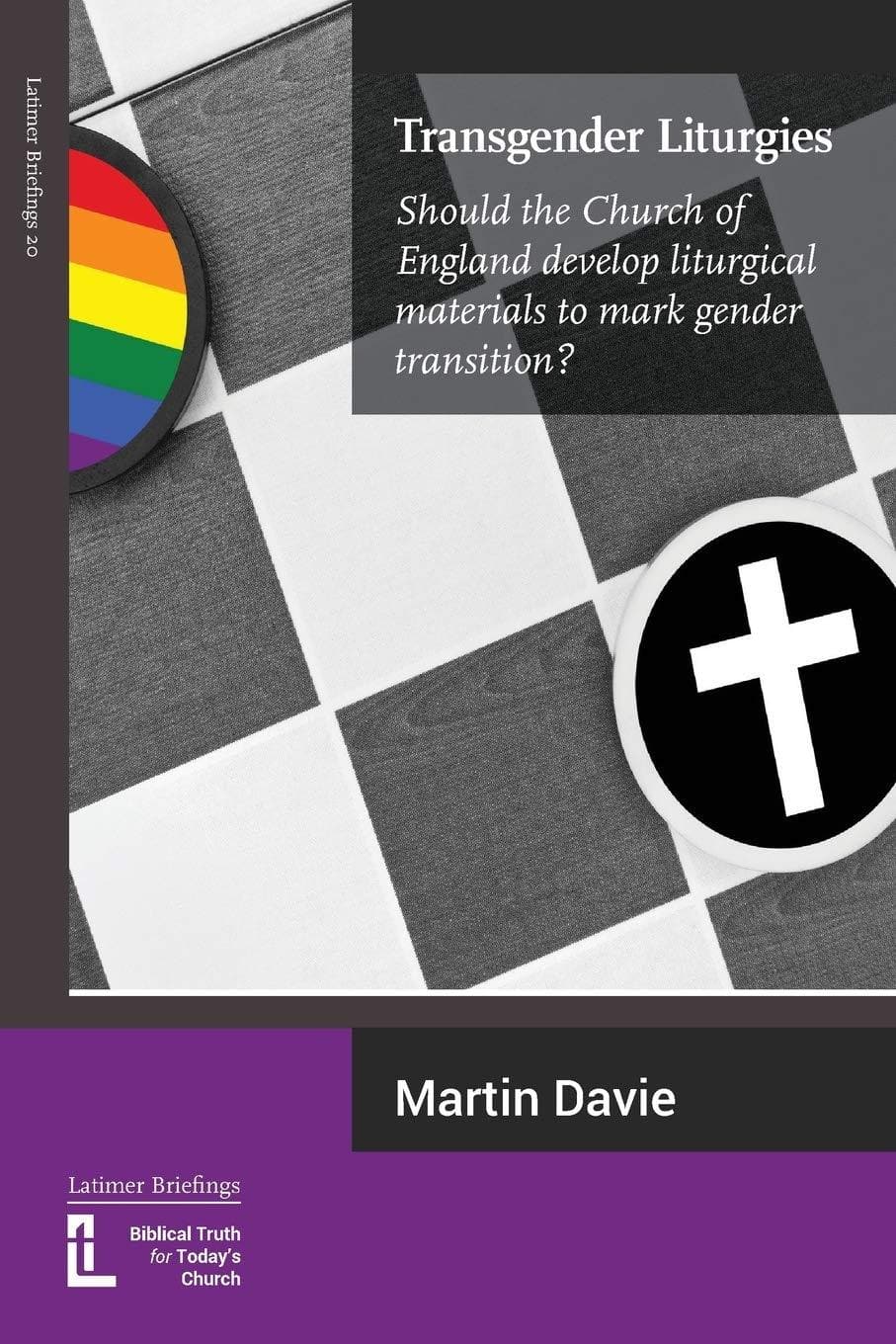
Transgender Liturgies: Should the Church of England Develop Liturgical Materials to Mark Gender Transition?
In April 2015 Blackburn Diocesan Synod passed the following motion:
‘That this Synod, recognising the need for transgender people to be welcomed and affirmed in their parish church, calls on the House of Bishops to consider whether some nationally commended liturgical materials might be prepared to mark a person’s gender transition’.
The purpose of this study is to consider whether it would be right for the members of General Synod to vote in favour of this motion.
The study is in five chapters.
Chapter 1 explains in more detail what the motion proposes and the theological implications of passing it.
Chapter 2 shows how the case for the acceptance of gender transition is made out in three representative documents by Christina Beardsley, Chris Dowd and Justin Tanis.
Chapter 3 presents a critical analysis of what is said in these documents, explaining why it does not provide a convincing basis for accepting the idea at the heart of gender transition that someone’s true self can be separated from their biological sex.
Chapter 4 sets out an alternative Christian theological framework for approaching gender transition and for giving pastoral care for transgender people.
Chapter 5 explains why this means that it would not be right to support the Blackburn motion.
120 pages.
Original: $8.56
-65%$8.56
$3.00Product Information
Product Information
Shipping & Returns
Shipping & Returns
Description
In April 2015 Blackburn Diocesan Synod passed the following motion:
‘That this Synod, recognising the need for transgender people to be welcomed and affirmed in their parish church, calls on the House of Bishops to consider whether some nationally commended liturgical materials might be prepared to mark a person’s gender transition’.
The purpose of this study is to consider whether it would be right for the members of General Synod to vote in favour of this motion.
The study is in five chapters.
Chapter 1 explains in more detail what the motion proposes and the theological implications of passing it.
Chapter 2 shows how the case for the acceptance of gender transition is made out in three representative documents by Christina Beardsley, Chris Dowd and Justin Tanis.
Chapter 3 presents a critical analysis of what is said in these documents, explaining why it does not provide a convincing basis for accepting the idea at the heart of gender transition that someone’s true self can be separated from their biological sex.
Chapter 4 sets out an alternative Christian theological framework for approaching gender transition and for giving pastoral care for transgender people.
Chapter 5 explains why this means that it would not be right to support the Blackburn motion.
120 pages.