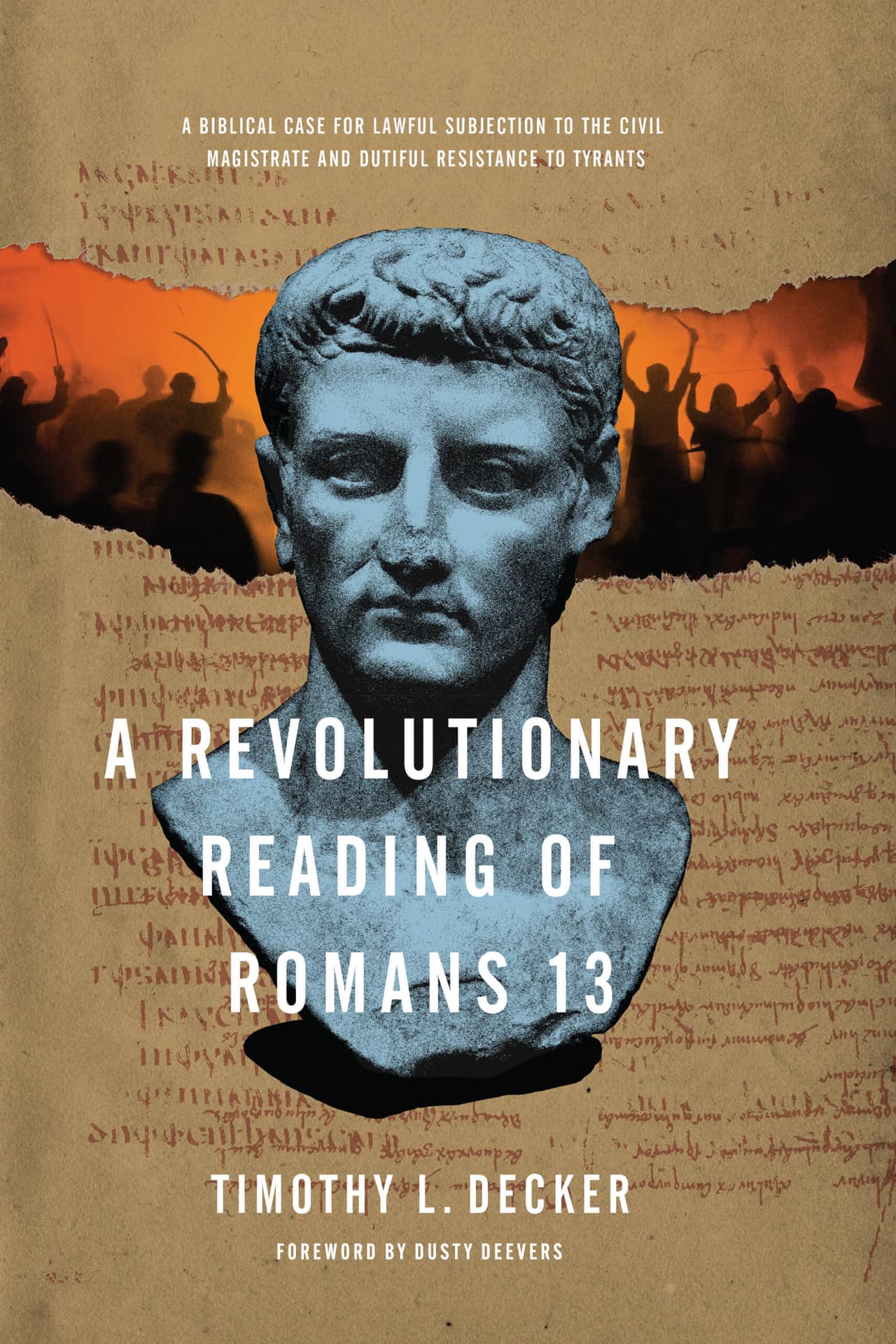
Revolutionary Reading of Romans 13, A
Does Romans 13 command Christians a near unqualified obedience toward the civil magistrate? Is there an appropriate occasion and even a duty to resist tyranny, even if the tyranny is not sinful, per se? The aim of this book is to shed light on the fact that Paul's appeal for submission to governmental authorities in Romans 13 is far narrower than it so often gets treated. The many events and crises of 2020 revealed the broad brush strokes Christians often painted with it and thereby abuse of it. It is here argued that the apostle Paul wrote Romans 13 within a specific historical context, a pastoral occasion if you will, to take up the matter of warding off the common Jewish revolutionary spirit so pervasive in that period. Such a sentiment of private revolution among church members of Rome would have undermined a Gentile government and thereby destroyed the gospel influence of the Christian church in Rome. In this way, this book offers a revolutionary reading of Romans 13—that Paul opposed private revolution among private citizens. Therefore, rightly understood, Romans 13 teaches lawful subjection to the civil magistrate while at the same time affirming a Christian's duty to resist tyranny.
President, International Reformed Baptist Seminary
Pastor, Grace Reformed Baptist Church, Owensboro, KY
President, Covenant Baptist Theological Seminary
Part 1: The Historical World Behind Romans 13
Chapter 1: The Background to Romans and Paul’s Pastoral Occasion
Part 2: The Exegetical World Within Romans 13
Chapter 4: Jew and Gentile Controversy in Romans 12–15
Chapter 5: Exegetical Exposition of Romans 13:1–7 (Part 1)
Chapter 6: Exegetical Exposition of Romans 13:1–7 (Part 2)
Chapter 7: Romans 13 Read with Other Passages of Scripture
Chapter 8: Sphere Sovereignty and Self-Governance
Chapter 9: Tyranny Biblically Defined
Chapter 10: Romans 13 Applied Today
Conclusion
Scripture Index
Original: $40.68
-65%$40.68
$14.24Product Information
Product Information
Shipping & Returns
Shipping & Returns
Description
Does Romans 13 command Christians a near unqualified obedience toward the civil magistrate? Is there an appropriate occasion and even a duty to resist tyranny, even if the tyranny is not sinful, per se? The aim of this book is to shed light on the fact that Paul's appeal for submission to governmental authorities in Romans 13 is far narrower than it so often gets treated. The many events and crises of 2020 revealed the broad brush strokes Christians often painted with it and thereby abuse of it. It is here argued that the apostle Paul wrote Romans 13 within a specific historical context, a pastoral occasion if you will, to take up the matter of warding off the common Jewish revolutionary spirit so pervasive in that period. Such a sentiment of private revolution among church members of Rome would have undermined a Gentile government and thereby destroyed the gospel influence of the Christian church in Rome. In this way, this book offers a revolutionary reading of Romans 13—that Paul opposed private revolution among private citizens. Therefore, rightly understood, Romans 13 teaches lawful subjection to the civil magistrate while at the same time affirming a Christian's duty to resist tyranny.
President, International Reformed Baptist Seminary
Pastor, Grace Reformed Baptist Church, Owensboro, KY
President, Covenant Baptist Theological Seminary
Part 1: The Historical World Behind Romans 13
Chapter 1: The Background to Romans and Paul’s Pastoral Occasion
Part 2: The Exegetical World Within Romans 13
Chapter 4: Jew and Gentile Controversy in Romans 12–15
Chapter 5: Exegetical Exposition of Romans 13:1–7 (Part 1)
Chapter 6: Exegetical Exposition of Romans 13:1–7 (Part 2)
Chapter 7: Romans 13 Read with Other Passages of Scripture
Chapter 8: Sphere Sovereignty and Self-Governance
Chapter 9: Tyranny Biblically Defined
Chapter 10: Romans 13 Applied Today
Conclusion
Scripture Index