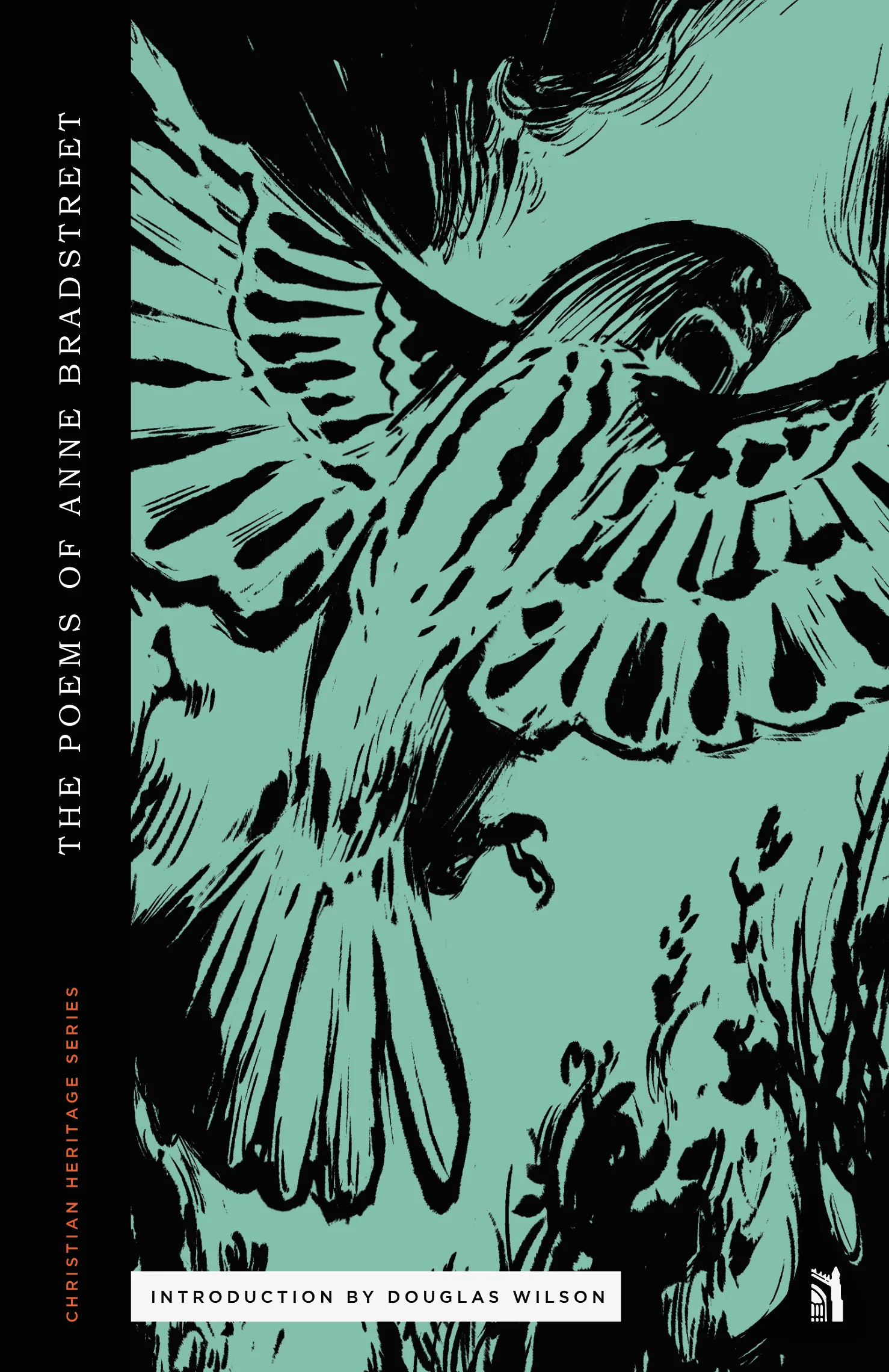
Poems of Anne Bradstreet, The
Anne Bradstreet came to fame when someone published her poetry as The Tenth Muse Lately Sprung Up in America . Anne Bradstreet was a Puritan who had crossed the ocean to help found the new colony in America. She lived on the frontier and lived a fairly uneventful life loving her husband and children. However, she was also a well-educated and imaginative woman whose poetry continues to be admired to this day. This collection of her poems is a forgotten classic that we would be well advised to read.
“A real sense of calm pervades Bradstreet’s poetry. She has genuine affection for the things she writes about, whether that be family, or the vistas of nature, or her husband, or the “pleasant things” lost in the house fire, and so in no way does she come across as a pinched ascetic. But neither does she come across as someone who is in frantic pursuit of worldly goods.” ~From Douglas Wilson’s Introduction
306 pages.
View excerpt here.
“Here follow some verses upon the burning of our house, July 10th, 1666. Copied out of a loose paper.”
In silent night, when rest I took,
For sorrow near I did not look.
I wakened was with thundering noise
And piteous shrieks of dreadful voice.
That fearful sound of “Fire!” and “Fire!”
Let no man know, is my desire.
I, starting up, the light did spy,
And to my God my heart did cry
To strengthen me in my distress,
And not to leave me succorless;
Then coming out, beheld apace
The flame consume my dwelling-place.
And when I could no longer look
I blest his name that gave and took,
That laid my goods now in the dust;
Yea, so it was, and so ’twas just—
It was his own; it was not mine.
Far be it that I should repine.
He might of all justly bereft,
But yet sufficient for us left.
When by the ruins oft I passed
My sorrowing eyes aside did cast,
And here and there the places spy
Where oft I sat, and long did lie.
Here stood that trunk, and there that chest;
There lay that store I counted best;
My pleasant things in ashes lie,
And them behold no more shall I.
Under thy roof no guest shall sit,
Nor at thy table eat a bit;
No pleasant tale shall e’er be told,
Nor things recounted done of old;
No candle e’er shall shine in thee,
Nor bridegroom’s voice e’er heard shall be.
In silence ever shalt thou lie.
Adieu, adieu; all’s vanity.
Then straight I ’gan my heart to chide:
And did thy wealth on earth abide?
Didst fix thy hope on mouldering dust,
The arm of flesh didst make thy trust?
Raise up thy thoughts above the sky,
That dunghill mists away may fly.
Thou hast an house on high erect;
Framed by that mighty Architect,
With glory richly furnished,
Stands permanent though this be fled.
It’s purchaséd, and paid for, too,
By Him who hath enough to do—
A price so vast as is unknown,
Yet, by his gift, is made thine own.
There’s wealth enough; I need no more.
Farewell, my pelf; farewell, my store;
The world no longer let me love.
My hope and treasure lie above.
Anne Bradstreet, Meditations When My Soul Hath Been Refreshed
Product Information
Product Information
Shipping & Returns
Shipping & Returns
Description
Anne Bradstreet came to fame when someone published her poetry as The Tenth Muse Lately Sprung Up in America . Anne Bradstreet was a Puritan who had crossed the ocean to help found the new colony in America. She lived on the frontier and lived a fairly uneventful life loving her husband and children. However, she was also a well-educated and imaginative woman whose poetry continues to be admired to this day. This collection of her poems is a forgotten classic that we would be well advised to read.
“A real sense of calm pervades Bradstreet’s poetry. She has genuine affection for the things she writes about, whether that be family, or the vistas of nature, or her husband, or the “pleasant things” lost in the house fire, and so in no way does she come across as a pinched ascetic. But neither does she come across as someone who is in frantic pursuit of worldly goods.” ~From Douglas Wilson’s Introduction
306 pages.
View excerpt here.
“Here follow some verses upon the burning of our house, July 10th, 1666. Copied out of a loose paper.”
In silent night, when rest I took,
For sorrow near I did not look.
I wakened was with thundering noise
And piteous shrieks of dreadful voice.
That fearful sound of “Fire!” and “Fire!”
Let no man know, is my desire.
I, starting up, the light did spy,
And to my God my heart did cry
To strengthen me in my distress,
And not to leave me succorless;
Then coming out, beheld apace
The flame consume my dwelling-place.
And when I could no longer look
I blest his name that gave and took,
That laid my goods now in the dust;
Yea, so it was, and so ’twas just—
It was his own; it was not mine.
Far be it that I should repine.
He might of all justly bereft,
But yet sufficient for us left.
When by the ruins oft I passed
My sorrowing eyes aside did cast,
And here and there the places spy
Where oft I sat, and long did lie.
Here stood that trunk, and there that chest;
There lay that store I counted best;
My pleasant things in ashes lie,
And them behold no more shall I.
Under thy roof no guest shall sit,
Nor at thy table eat a bit;
No pleasant tale shall e’er be told,
Nor things recounted done of old;
No candle e’er shall shine in thee,
Nor bridegroom’s voice e’er heard shall be.
In silence ever shalt thou lie.
Adieu, adieu; all’s vanity.
Then straight I ’gan my heart to chide:
And did thy wealth on earth abide?
Didst fix thy hope on mouldering dust,
The arm of flesh didst make thy trust?
Raise up thy thoughts above the sky,
That dunghill mists away may fly.
Thou hast an house on high erect;
Framed by that mighty Architect,
With glory richly furnished,
Stands permanent though this be fled.
It’s purchaséd, and paid for, too,
By Him who hath enough to do—
A price so vast as is unknown,
Yet, by his gift, is made thine own.
There’s wealth enough; I need no more.
Farewell, my pelf; farewell, my store;
The world no longer let me love.
My hope and treasure lie above.