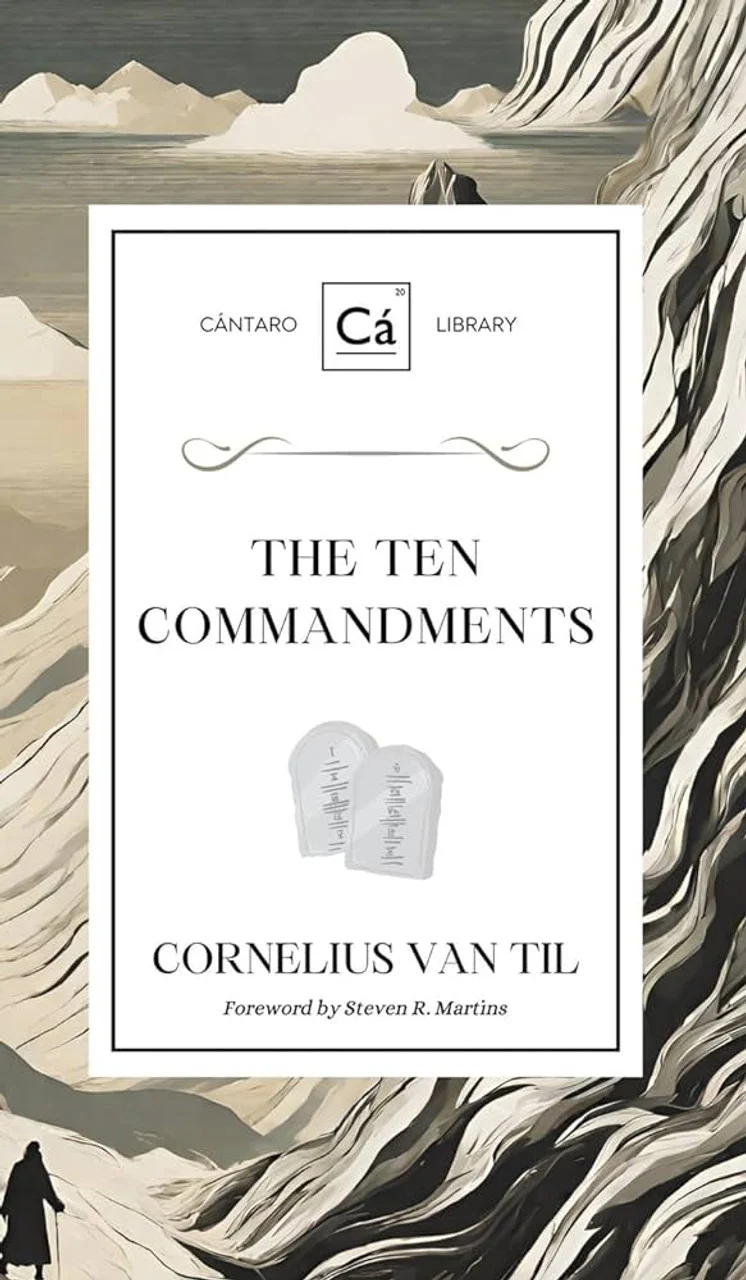
Ten Commandments, The
The Ten Commandments (1933) by Cornelius Van Til was an unpublished curriculum on Christian ethics taught at Westminster Theological Seminary before the arrival of John Murray. It is a must-read for any Christian seeking to understand God’s law, its relevance today, and its necessity for Christian life and witness.
In his inimitable style, Cornelius Van Til begins his treatment of the Ten Commandments by reminding us that ethics must be rooted in the being and authority of the God of Scripture. The only alternative, Van Til says, is to base supposed ethical obligations on something other than God, that is, on something finite. Van Til pushes us to question whether ethical obligations or values based on finite authorities, hopes, or motives truly govern ethical behavior in any universally meaningful way. In other words, on this basis, is there something-even actions that may initially seem beautiful or cruel-that is right or wrong? Is there truly good or evil? Van Til’s conclusion is clear: ethics must first be about God and His righteousness, or it is about nothing at all.
222 pages.
Original: $34.26
-65%$34.26
$11.99Product Information
Product Information
Shipping & Returns
Shipping & Returns
Description
The Ten Commandments (1933) by Cornelius Van Til was an unpublished curriculum on Christian ethics taught at Westminster Theological Seminary before the arrival of John Murray. It is a must-read for any Christian seeking to understand God’s law, its relevance today, and its necessity for Christian life and witness.
In his inimitable style, Cornelius Van Til begins his treatment of the Ten Commandments by reminding us that ethics must be rooted in the being and authority of the God of Scripture. The only alternative, Van Til says, is to base supposed ethical obligations on something other than God, that is, on something finite. Van Til pushes us to question whether ethical obligations or values based on finite authorities, hopes, or motives truly govern ethical behavior in any universally meaningful way. In other words, on this basis, is there something-even actions that may initially seem beautiful or cruel-that is right or wrong? Is there truly good or evil? Van Til’s conclusion is clear: ethics must first be about God and His righteousness, or it is about nothing at all.
222 pages.